Dark vs Milk vs White Chocolate: What Actually Sets Them Apart
Dark, milk, and white chocolate all start with the same raw material, the cacao bean, yet they land in such different places that a substitution in a recipe rarely goes unnoticed. The differences come down to four ingredients present in different ratios: cocoa solids, cocoa butter, milk solids, and sugar.
Dark chocolate is built mainly from cocoa solids and cocoa butter plus sugar, with little to no milk. Milk chocolate adds a meaningful amount of milk solids and milk fat, softening the cocoa intensity and adding a creamy note, and it typically carries more sugar than dark chocolate to balance the added milk. White chocolate skips cocoa solids almost entirely; it is made from cocoa butter, milk solids, and sugar, which is why it lacks the characteristic brown color and deep cocoa flavor of the other two, tasting instead of vanilla, milk, and sweetened fat.
These are not just kitchen conventions, they are legal categories in most major markets. In the United States, FDA regulations under Title 21 of the Code of Federal Regulations, Part 163, spell out minimum requirements for each type. Milk chocolate must contain at least 10 percent chocolate liquor, at least 3.39 percent milkfat, and at least 12 percent total milk solids. White chocolate must contain at least 20 percent cocoa butter, at least 3.5 percent milkfat, and at least 14 percent total milk solids, with no more than 55 percent sweeteners. A product that falls short of these thresholds legally cannot be labeled using the word chocolate the same way, which is part of why "chocolate flavored" coatings exist as a separate labeling category entirely.
Flavor and texture differences follow directly from this composition. Dark chocolate's higher proportion of cocoa solids brings bitterness, roasted notes, and sometimes fruity or earthy undertones depending on the beans used, along with a firmer bite. Milk chocolate's added dairy rounds out those sharper notes into something creamier and sweeter, with a softer melt. White chocolate, having no cocoa solids to buffer the sugar and milk, tends to taste the sweetest and simplest of the three, and its texture is the softest and most prone to becoming grainy if mishandled.
Melting point is where these compositional differences become a practical baking concern. Cocoa butter itself has a fairly narrow melting range just below body temperature, which all three chocolate types share to some degree, but the milk solids and higher sugar concentration in milk and especially white chocolate lower their scorch threshold. White chocolate contains no cocoa solids to absorb and buffer heat, so it seizes and scorches far more easily than dark chocolate over direct heat, which is why recipes routinely warn to melt it low and slow, ideally in short microwave bursts or over a double boiler kept well below a simmer.
Nutritionally, the three types diverge mainly in sugar and fiber rather than calories, which stay fairly similar across the board once fat content is accounted for. Data compiled in the USDA's FoodData Central nutrient database shows dark chocolate carrying noticeably less sugar and more fiber per serving than milk or white chocolate, largely because a smaller share of the bar needs to be sugar to balance the more bitter cocoa solids. Milk and white chocolate, with less or no bitterness to offset, generally lean sweeter and contain more added sugar by weight.
Choosing among the three usually comes down to what a recipe needs from both flavor and behavior. Dark chocolate holds up best in recipes that need a firm structure or a counterpoint to sweetness, such as ganache or ganache-based ice cream. Milk chocolate works well anywhere a softer, sweeter profile suits the other ingredients, like classic chocolate chip cookies or caramel bars. White chocolate is best treated as a flavoring and textural element rather than a stand-in for real chocolate, useful for drizzles, contrast in a marbled dessert, or recipes specifically built around its sweetness, but it is a poor substitute anywhere a recipe is counting on cocoa solids to provide structure or bitterness.
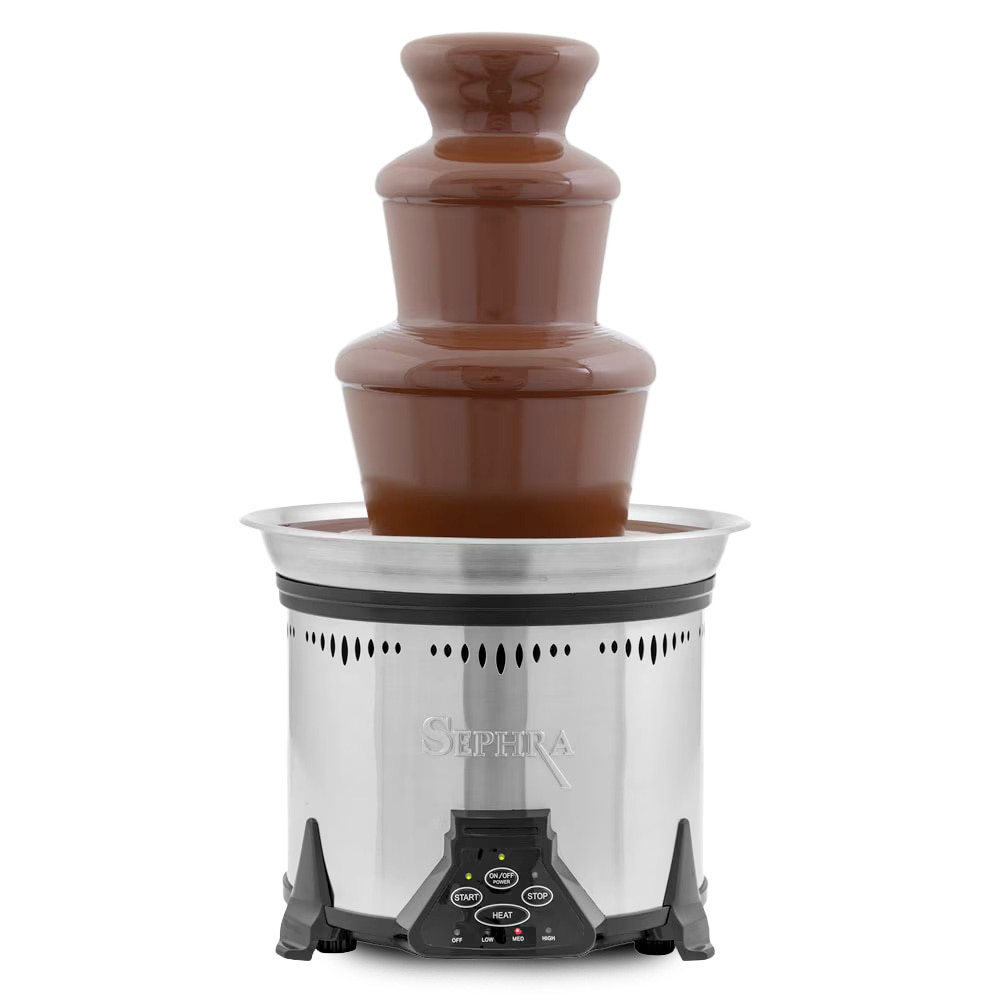
Bring the chocolate shop home with Sephra. Chocolate fountains, fondue melts and couverture-grade wafers shipped to your door.
See the chocolate fountains