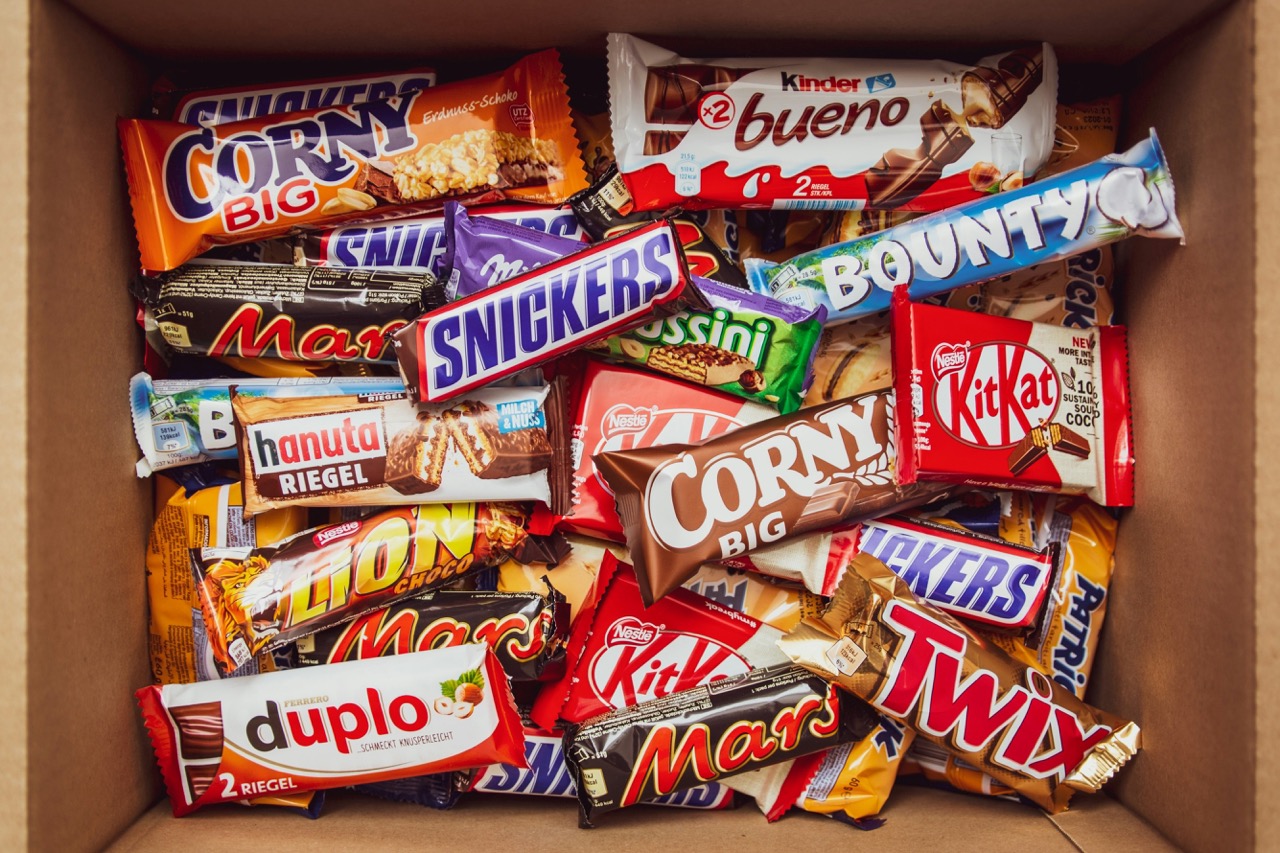
What’s the Real Difference Between Chocolate and Candy?
Purchases made through links on this page may earn this website a small commission at no extra cost to the reader. Click here for more information.
You’ve probably seen the claim before: “that’s not real chocolate, that’s just candy.” It sounds like nitpicking, but there’s actually a legal, technical basis behind the distinction – and once you know what to look for, it’s easy to spot the difference on a shelf.
Chocolate Is a Legally Defined Product
In the United States, chocolate isn’t just a flavour – it’s a regulated category with specific requirements. Under FDA rules (21 CFR Part 163), in order for something to be called chocolate, it has to contain chocolate liquor, which is the thick paste made from grinding roasted, milled cocoa nibs. Chocolate liquor is made up of both cocoa solids and cocoa butter, and it’s the foundation every legitimate dark, milk, and white chocolate product is built on.
The specific requirements vary by type:
- Milk chocolate must contain at least 10% chocolate liquor, 3.39% milkfat, and 12% milk solids.
- Sweet (dark) chocolate must contain at least 15% chocolate liquor by weight, with semisweet versions requiring at least 35%.
- White chocolate must contain 20% cocoa butter and 14% milk solids – though notably, it contains no chocolate liquor at all, which is why some chocolate purists argue it isn’t “real” chocolate in the first place.
If a product doesn’t meet these thresholds, it legally cannot be labeled as chocolate in the U.S. – it has to be called “chocolate flavored” or “chocolatey” instead.
So What Makes Something “Just Candy”?
This is where the labeling gets sneaky. A lot of products marketed with chocolate branding and imagery use a substitute coating made primarily from vegetable fats like palm oil instead of cocoa butter. These products often use the word “chocolatey” rather than “chocolate” specifically because they don’t meet the legal cocoa liquor or cocoa butter thresholds. It’s a subtle word choice, but it’s doing a lot of legal work – and most shoppers never notice it.
This is the technical basis for the “chocolate isn’t candy” argument: a chocolate bar, in the legal and culinary sense, must derive its flavour and structure from actual cocoa beans. A chocolate-coated candy bar that leans heavily on sugar, vegetable fat, and flavourings – with only a small fraction of actual cocoa content – sits in a different category, even if it’s sold right next to real chocolate bars and looks nearly identical on the shelf.
How to Tell the Difference Yourself
You don’t need a food science degree to spot the distinction. A few practical habits make it easy:
Check the ingredient list, not the front of the package. If “cocoa butter” appears low on the list – or not at all, replaced by “vegetable fat” or “palm oil” – you’re likely looking at a chocolate-flavored candy rather than true chocolate.
Look for cacao percentage. Dark chocolate bars proudly display their cacao percentage (70%, 85%, 99%, etc.) precisely because higher percentages signal more chocolate liquor and less filler. Mass-market candy bars rarely advertise a percentage, because there usually isn’t much to brag about.
Watch the wording. “Chocolate” and “chocolate flavored” are not interchangeable under FDA rules. If a label avoids the word “chocolate” entirely in favour of “chocolatey” or “chocolate flavor,” that’s a deliberate and legally meaningful choice.
Why It Actually Matters
This isn’t just pedantry for its own sake. Cocoa butter and chocolate liquor behave very differently in your mouth than vegetable fat substitutes – they melt at close to body temperature, which is part of why good chocolate has that distinctive “melt in your mouth” quality that cheaper substitutes never quite replicate. The fat content in true chocolate isn’t filler; it’s structural, giving chocolate its snap, its smoothness, and a meaningful share of its flavour.
None of this means mass-market chocolate-flavored candy is bad, or that you need to swear off it. Plenty of people enjoy both, and that’s perfectly fine. But if you’re trying to understand why a $12 bar from a small-batch chocolate maker tastes nothing like a supermarket candy bar – despite both having “chocolate” somewhere on the label – the answer usually comes down to exactly this distinction: one is built from cocoa, and the other is built around it.